
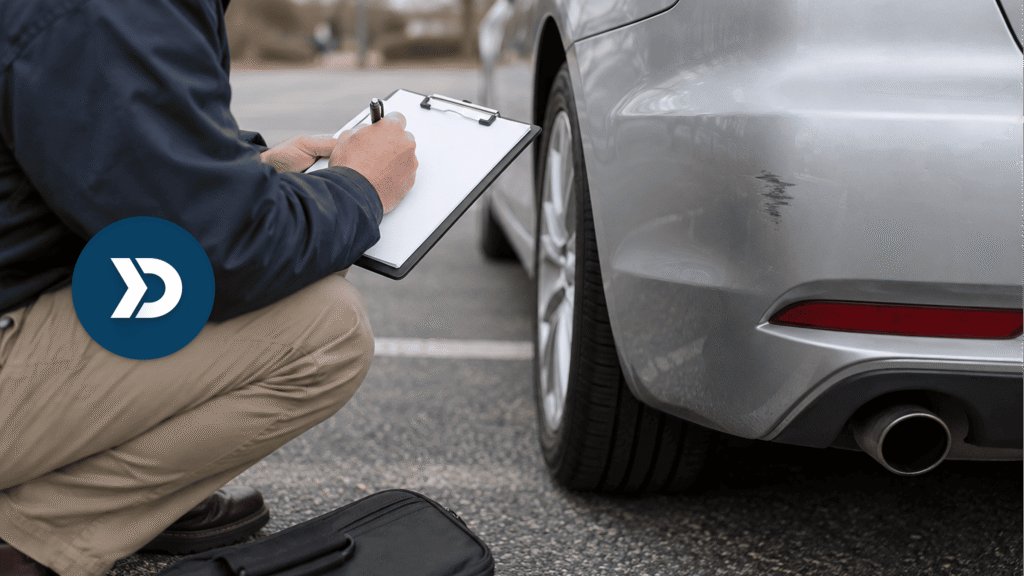
How mobile telematics helps insurance companies to improve claims management

Smartphones changed how insurers reach customers. Digital products ship faster. The counterweight is claims fraud — staged losses, inflated files, and thin FNOL.
Why it is important
Mobile telematics is one lever against a ~$40 billion U.S. insurance-fraud problem (FBI estimate). Trip, location, and event data make staged or inflated auto claims harder to hide.
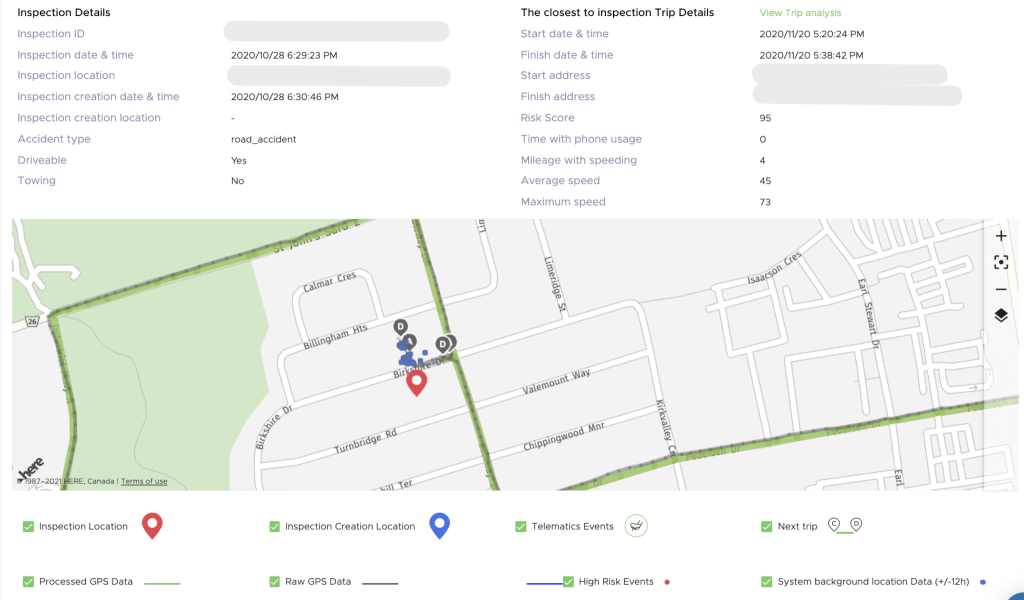
Full journey — crash detection through FNOL and settlement: how mobile telematics reimagines the insurance claims lifecycle.
Auto claims fraud is among the most common insurance losses. It ranges from misstated applications to inflated damage, staged crashes, phantom injury, and fake theft.
FBI estimates put U.S. insurance fraud above $40 billion a year — roughly $400–$700 extra premium per customer. Phone-based monitoring of location and motion makes exaggeration harder and speeds honest files.
Telematics deters fraud because the trip is already on file. Location, driving behavior, and motion are visible — so a staged or padded claim has to match the sensors.
This article covers hard vs soft fraud, why a mobile feed beats after-the-fact investigation, and how that shows up in loss ratio.
Identifying hard and soft fraud
Courts and SIU teams split auto fraud into two buckets:
- Hard fraud: a planned fake — staged crash, fake theft, invented injury — often crime-ring work.
- Soft (opportunistic) fraud: a real event, then exaggeration in the first 24 hours to raise the payout.
Hard fraud needs a higher bar at bind: if the book collects trip data, rings often shop elsewhere. Soft fraud needs a fast FNOL: the file is already filled from the phone, so the story has less room to drift.
A telematics SDK is the usual delivery path into the carrier or MGA app.
Claims fraud sensitivity table

Mobile telematics prevents car insurance claims fraud
If rings know the vehicle and trip are logged, they are less likely to bind. That is hard-fraud avoidance.
Honest customers usually accept tracking when it is tied to a discount. After a crash, GPS and event data are already in the FNOL — so padding injury or damage is harder. That is soft-fraud control.
How mobile telematics leads to loss reduction
Therefore, we have three main factors that have a great impact on reducing the loss ratio:
1. Fraud prevention — by making data and GPS sharing obligatory, we restrain criminals from becoming our clients and attempting fraud.
2. High-risk driver detection — based on our scoring model, insurance companies are able to detect careful drivers from daredevils and raise prices for the latter.
3. Behavior modification — with rewards and the aspect of competing for the best score, it is possible to influence driving behavior to make it safer and reduce high risks of insurance claims.
An easy solution for your business
Damoov ships the stack carriers use for this: Telematics SDK, processing platform, API, DataHub for ops, and Zenroad as an open-source app to start from.
It takes less than 12 hours to add mobile telematics capabilities to any mobile application, using Telematics SDK and API services for the development of native and cross-platform apps like Flutter, ReactNative, and others. Simple integrating features are at your service to bring the telematics system to your customers through their browsers, mobiles, smartphones as soon as possible.
Customers from more than 18 countries trust our technology and have already built products using our telematics suite. We at Damoov are making it possible for companies to focus on other product development, by providing telematics infrastructure they don’t have to build themselves. By changing the way customers approach usage-based insurance products, forming enough data for which usually can take up to a whole year, we can make it easier for you to develop smart driving apps, save money and time. We provide contactless mobile telematics that utilizes smartphone capabilities even in the background mode, to make sure that nothing distracts the customer from driving, and the insurance company gets all of the required data.
Frequently Askes Questions(FAQ)
How is telematics used in insurance? With Telematics motor insurance or UBI, insurance companies will understand the car owner’s risk profile based on the distance covered, the average speed of the vehicle, frequency of using the vehicle, and the overall driving skills.
This information is used to charge an appropriate premium. Can telematics increase premium? Yes. If the telematics device records that you’re regularly speeding or driving dangerously, your insurer has the right to increase your premium.
Do insurance companies check black boxes? A black box can detect a driver’s speed, location, acceleration, braking, cornering, daily mileage, and other driving habits.
Car insurance companies use the information black boxes detect to determine premiums and discounts for drivers participating in telematics insurance programs, also called usage-based insurance.
Useful links
- Company website: Damoov telematics platform
- Open-source telematics app: Damoov telematics app
- Telematics SDK: Damoov telematics SDK
- Telematics API: Damoov telematics API
- Developer portal: Damoov documentation
- Datahub: Damoov DataHub
- Github: Damoov SDK on GitHub