
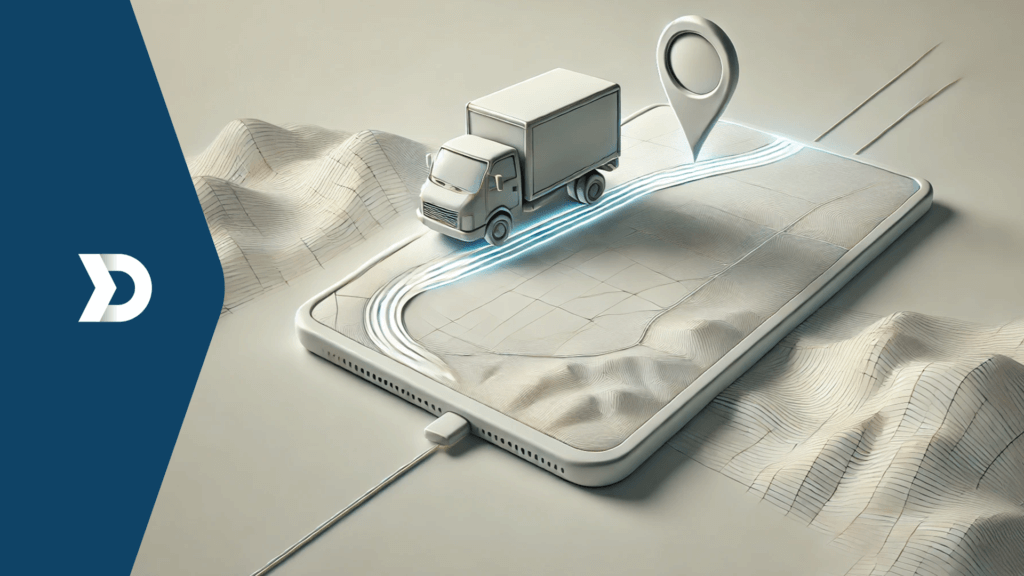
The last mile — DC to doorstep — is usually the most expensive, least reliable stretch of a delivery. Faster windows and fewer misses are the job.
Mobile telematics gives live location, driver events, and ETA context from the phone. It does not replace the TMS that sequences stops. What you get is route-as-traveled and traffic context so planners can act.
Proof of drop-off: how mobile telematics verifies food and package deliveries. Product jobs for courier apps: gig and delivery solutions.
The Role of Mobile Telematics in Last-Mile Delivery
Last-mile teams use mobile telematics for location, ETAs, and coaching — not as a black-box hardware stack. The data sits in the same app the driver already runs.
Key Benefits of Mobile Telematics in Last-Mile Delivery:
- Real-time tracking: managers and customers see where the vehicle is. Windows get tighter.
- Route-as-traveled: GPS and traffic context show delay and drift. The TMS still picks the stop order — Damoov does not optimize routes.
- Driver performance: speeding, harsh braking, and idle become coaching signals and fuel waste you can cut.
- Customer updates: status and ETA from the live feed, not a guess.
Industry Data: How Mobile Telematics Optimizes Last-Mile Performance
The use of mobile telematics in last-mile delivery is backed by industry data demonstrating its positive impact on operational efficiency and customer satisfaction.
Last-mile delivery is one of the most expensive segments of the logistics process. By showing routes as driven and where delivery time is lost, mobile telematics can help logistics companies cut costs and improve profitability.
- Delivery times: fewer surprises when dispatch sees congestion and idle as they happen — not because a Damoov router rewrote the day.
- On-time rate: live location plus the existing plan makes commitments easier to keep.
For instance, studies highlight that last-mile delivery costs account for 53% of total shipping costs, making it a priority for companies to optimize. Telematics plays a key role in cutting down these costs by giving route planning real trip data and reducing idle time.
How Mobile Telematics Can Solve Last-Mile Inefficiencies
Despite its critical importance, the last-mile delivery process is rife with inefficiencies, including traffic congestion and inaccurate delivery windows. These inefficiencies not only drive up operational costs but also negatively impact customer satisfaction. Mobile telematics provides a comprehensive solution to these challenges.
- Congestion: live GPS shows the jam. Dispatch or the TMS can reroute. Damoov does not auto-build a new sequence.
- Delivery windows: predicted arrival from actual location beats a wide estimate.
- Fleet visibility: last-mile managers see location, events, and exceptions in one place.
Challenges and Future Potential of Mobile Telematics in Last-Mile Delivery
While mobile telematics offers tremendous benefits in last-mile delivery, there are several mobile-specific challenges that logistics companies must consider. At the same time, advancements in mobile technology are unlocking new potential to further enhance last-mile efficiency.
Challenges:
1) Initial Setup and Implementation Costs
For smaller fleets, particularly those that rely on mobile devices and smartphone-based telematics solutions, the initial cost of integrating mobile telematics can be a barrier.
Unlike traditional telematics systems that require the installation of hardware in vehicles, mobile telematics solutions rely on smartphone apps and data from mobile devices.
This approach is generally more affordable but still requires investment in high-quality mobile devices, app development, and secure data management platforms.
Companies need to ensure their mobile apps are reliable, easy to use, and provide real-time insights without a steep learning curve for drivers and fleet managers.
2) Integration with Legacy Systems
Many logistics companies still rely on older fleet management software that may not be designed to integrate with modern, mobile-based telematics systems.
This challenge is particularly prominent in smaller fleets, which may not have the resources to overhaul their existing systems. Integrating mobile telematics solutions with legacy systems often requires custom APIs or additional software layers, which can increase complexity and cost.
Mobile telematics apps must work seamlessly with existing fleet management platforms, allowing real-time data collection from mobile devices while maintaining compatibility with older infrastructure.
3) Mobile Data Security Concerns
Mobile telematics relies heavily on smartphones and mobile networks for data transmission, which introduces specific security challenges. Mobile devices are susceptible to theft, hacking, and unauthorized access, making data security a primary concern for fleet managers.
Secure mobile app development is critical to ensure that sensitive information, such as vehicle locations, driver behavior, and delivery routes, remains encrypted and protected.
Additionally, companies must ensure that data transmission over mobile networks is encrypted to prevent interception and breaches. Frequent security updates and strong authentication methods, such as two-factor authentication (2FA) for fleet managers and drivers, are essential to protect mobile telematics systems from cyber threats.
Future Potential
1) Mobile App Interfaces for Fleet Management
One of the most exciting areas of development in mobile telematics is the refinement of mobile app interfaces that allow fleet managers to track and manage vehicles in real-time from their smartphones or tablets.
This enables managers to monitor vehicle locations, delivery progress, and driver performance remotely, giving them unprecedented flexibility. Future advancements will likely focus on more intuitive, user-friendly mobile apps that provide detailed analytics, route optimization suggestions, and proactive maintenance alerts in real-time.
These apps will empower fleet managers to make data-driven decisions on the go, optimizing last-mile performance and reducing downtime.
2) Smartphone-Based Telematics for Smaller Fleets
Mobile telematics is leveling the playing field for smaller fleets by offering smartphone-based telematics solutions that are cost-effective and easy to implement.
These solutions leverage the GPS, accelerometer, and data capabilities of smartphones to collect and analyze fleet data without the need for expensive hardware installations.
As the technology evolves, we can expect more robust smartphone apps that offer advanced features such as driver scorecards, fuel efficiency tracking, and even integration with ride-sharing services.
This will allow smaller logistics companies to optimize their last-mile deliveries and compete with larger operators.
3) 5G Connectivity and Mobile Telematics
The rollout of 5G networks will greatly enhance the capabilities of mobile telematics systems. With faster data transfer speeds and lower latency, 5G will enable real-time tracking and dynamic route optimization with near-instantaneous data updates.
This will allow logistics companies to react quickly to changing traffic conditions or customer requests, further improving delivery times and customer satisfaction.
In dense urban areas where traffic patterns can change rapidly, 5G-powered mobile telematics will provide the speed and reliability necessary to optimize last-mile logistics in real time.
4) Enhanced Data Security and Encryption
As concerns around mobile data security grow, telematics providers are developing more advanced encryption technologies and mobile security protocols to protect sensitive information.
Future mobile telematics systems will incorporate stronger encryption standards and more secure data storage practices to prevent unauthorized access. Additionally, advancements in blockchain technology may offer new ways to secure data transmission between mobile devices and fleet management systems, ensuring that data remains tamper-proof and verifiable throughout the last-mile delivery process.
By overcoming the current challenges and embracing the future potential of mobile telematics, logistics companies can streamline last-mile delivery operations, reduce costs, and provide a superior customer experience.
As mobile telematics technology continues to evolve, it will become an essential tool for logistics operators seeking to stay competitive in a rapidly changing market.
Conclusion: Solving Last-Mile Inefficiencies with Mobile Telematics
E-commerce will keep putting pressure on the last mile. Operators who cannot show the trip will lose trust.
Mobile telematics is the visibility layer: live tracking, cleaner ETAs, and coaching. Pair it with the TMS you already use — do not wait on a hardware install.
Are you ready to leverage mobile telematics to optimize your last-mile delivery processes? Now is the time to embrace this game-changing technology and stay ahead in the race to meet customer demands.
Useful links
- Company website: Damoov telematics platform
- Open-source telematics app: Damoov telematics app
- Telematics SDK: Damoov telematics SDK
- Telematics API: Damoov telematics API
- Developer portal: Damoov documentation
- Datahub: Damoov DataHub
- Github: Damoov SDK on GitHub